Dubai, UAE — (ARAB NEWSWIRE) — As the UAE closes out H1 2026, the primary question for global investors is no longer whether the economy can expand, but whether its institutional framework can keep pace.
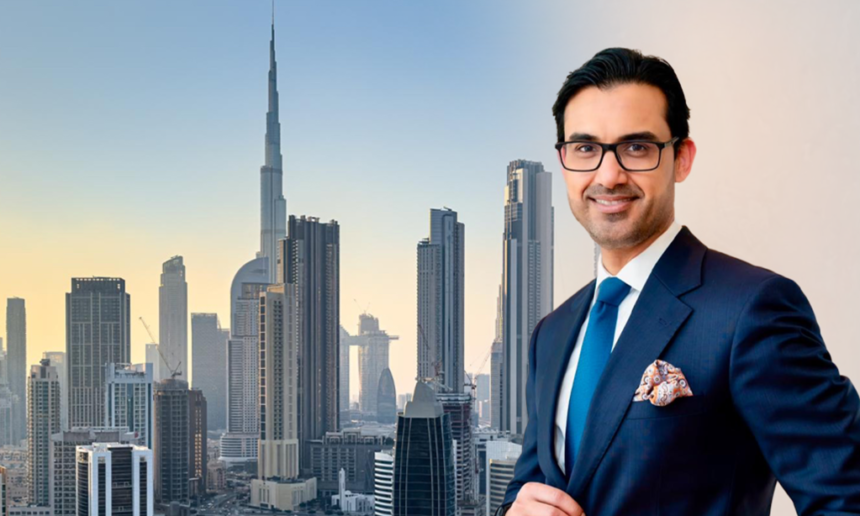
For Nasir Jamal, CEO of H Capital Limited, the first six months of the year provided a clear answer. Beyond headline growth, a quieter maturation occurred across trade channels, family governance, and financial technology, establishing five structural signals that will define what H2 demands from institutional leaders.
Follow Nasir Jamal on LinkedIn for more leadership insights, market trends, and financial growth updates.
Five Structural Signals from H1 2026
1. DIFC Crosses the 10,000-Company Threshold
The DIFC reached a significant milestone in H1, scaling to 10,018 active registered companies, a 30% year-over-year increase. The milestone reflects continued demand for DIFC’s established legal and regulatory framework and its role as a gateway to regional and global markets.
2. Institutionalization of Multi-Generational Wealth
DIFC recorded 1,408 active family entities (+36% YoY) and 1,409 registered foundations (+67% YoY). The growth reflects a broader shift toward formal wealth structures as families plan for succession and long-term continuity.
3. Expansion of the AI & FinTech Cluster
The technology and innovation sector continued to expand, with AI, FinTech, and innovation firms growing 39% year-over-year to 1,933. The growth strengthens Dubai’s position as a center for financial innovation, particularly as DIFC advances its ambition to become the world’s first AI-native financial center.
4. Record Non-Oil Foreign Trade
In a signal consistent with the UAE’s diversification strategy, non-oil foreign trade reached a record AED 1.937 trillion, representing a 13.1% year-over-year increase. Non-oil exports jumped 23.9% to AED 452.8 billion, reinforcing the UAE’s position as a major hub for international trade.
5. Dubai Reaches 7th Globally in the GFCI
Dubai climbed to 7th position worldwide in the Global Financial Centers Index (GFCI), up from 11th, its highest-ever ranking on the index. The jump makes Dubai the top-ranked financial center in the Middle East, Africa, and South Asia region, with continued progress toward its goal of reaching the top four globally by 2033.
“None of these developments sit in isolation,” says Nasir Jamal. “DIFC’s registry growing 30%, family entities and foundations expanding at an even faster pace, and Dubai strengthening its position in global financial rankings all point to a deeper pattern of institutional development.”
“The focus is likely to shift to continued trade growth, deeper institutionalization of wealth structures, and governance and reporting that keep pace with the scale of expansion,” Jamal says.
For institutions assessing the UAE’s longer-term trajectory, the real signal isn’t the numbers themselves. It’s whether the second half builds on them.
###
This press release is issued through Arab Newswire (www.arabnewswire.com) — a press release distribution service for the Arab World, Middle East and North Africa (MENA).